
Result Archive vs Current Result: What Is the Difference?
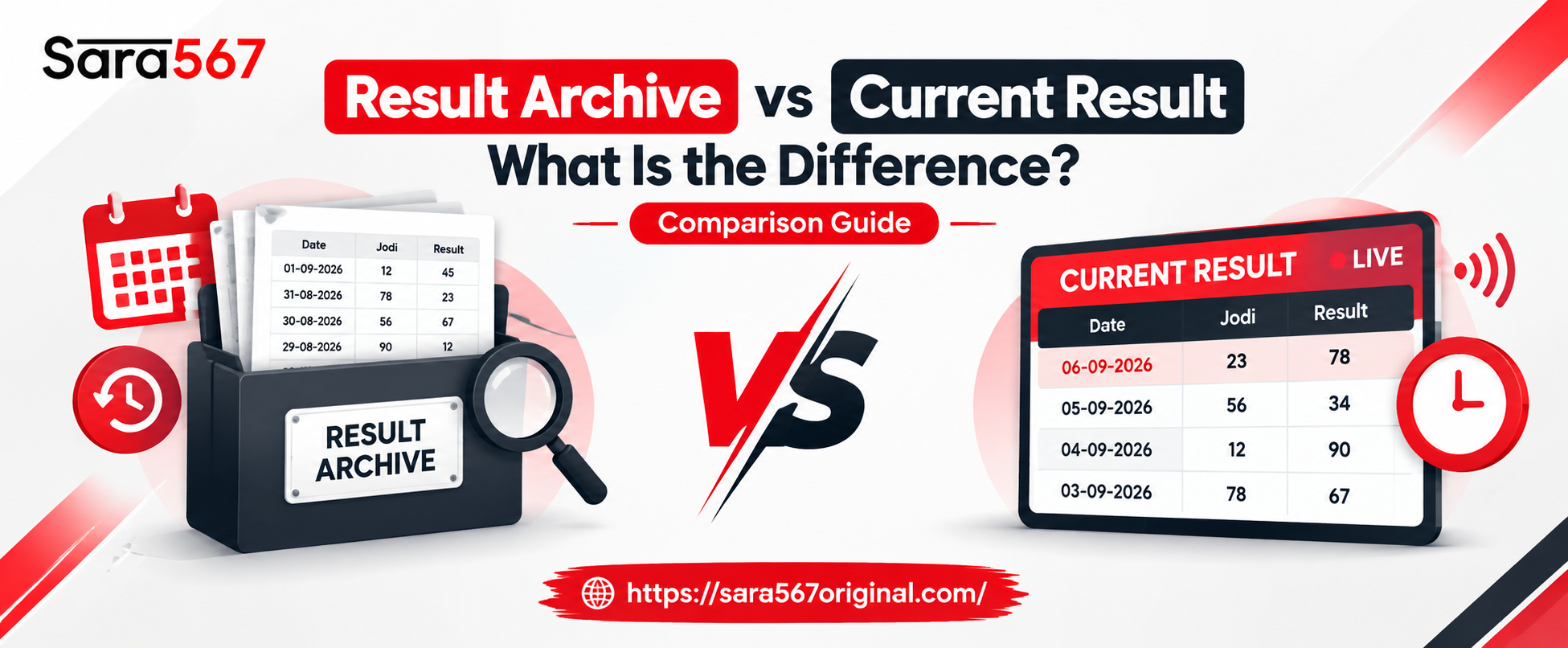
Imagine that you're trying to find a draw number on the internet, and arrive at a webpage with numbers that are arranged in lengthy rows and columns over a variety of dates. Another page is where you only see a small group of numbers clearly marked on top.
The two pages show drawing numbers, yet both serve different purposes. The one is an historical record designed to look back on times, whereas the second displays only the most recent data available.
Mixing these two formats in a confusing way is common particularly for people who are brand unfamiliar with charts on the internet. Being aware of the distinct difference between an archive from the past and a recent update can help in locating the precise details you require without causing confusion.
What Is a Matka Result Archive?
A result archive of matka is a stored document that documents and organizes previous draw numbers across weeks, days or even over years. In lieu of only revealing what has happened in the present the archive functions like a record of the past results.
If you browse through archives, you'll generally find data organized in a systematic manner. The typical historical log contains:
- Particular calendar dates and specific dates of the week
- The market session's name is the one that's designated.
- The opening digits, as well as the 3 digit panels (Pana)
- Combination of two-digit pairs (Jodi)
- Panels closing digits
- Monthly or weekly chart Layouts
The format of a historic archive may differ on different platforms. Certain display tables are compact and show just two-digit pairs, whereas others provide intricate grids that contain the full three-digit closing and opening figures. Whatever the style of presentation, an archive's primary purpose is straightforward: to save past numbers to refer back to.
What Is a Current Result?
An actual result, which is often described as the most recent or latest result--focuses exclusively on the latest published draw time for the particular session in the market.
In contrast to a chronological archive the current update doesn't intend to reveal what transpired three weeks prior. Its primary goal is to show the most current information for the current session.
A result page that is current usually emphasizes:
- The title of the current market session
- Current date
- The recently declared close or open numbers as they are made accessible
The result of the present day is based on current or recent announcements that change frequently during the day, as various markets reach their planned time. When a session is over and the time passes the current result will eventually be incorporated into the website's permanently-held historical records.
Matka Result Archive vs Current Result
For an understanding of how these two kinds of record contrast look at the short comparison in the following paragraphs:
| Feature | Result Archive | Current Result |
|---|---|---|
| Main Purpose | Re-read and refer to past records | Find the most up-to-date information available. |
| Time Period | Multiple-day, weekly or even monthly, historical dates | The current date or the most recent session |
| Information Shown | Historical tables for long-term time periods | One, recently declared result entry |
| Typical Use | Looking through chart logs of the past | Examining the declared result of today |
| Coverage Scope | Multi-date extensive collection | Only focusing on one specific time |
When you look at the tableau, the difference in function appears obvious. A database provides breadth over time while a contemporary result provides immediate focus on what's happening in the moment.
Why Do People Use a Result Archive?
A search through the archives can be beneficial when you require information rather than instant news. The majority of people open archives from the past for:
- Find an earlier result Recheck the date of an exact date from last week or the month before.
- Know the layout of charts: Find out the different ways that providers design their tables for long-term use.
- Check out the history of market transactions: see how often a market keeps track of the daily results across longer periods of time.
- View full monthly or weekly sets: Browse continuous spans of dates, without the need to navigate several daily pages.
Examining old tables is only the exercise of reading through the past. The numbers that are archived record the events that took place, but they don't reveal a secret code, or formula to predict the future draw.
Why Do People Check Current Results?
A current test result answers the immediate need to know what is the current reported number in this time?
Users search for the most recent updates at times when they'd like to
- Check if an open or closed number for the current session has been released.
- Verify that the number you see on the page corresponds to the calendar date of today.
- Find a quick solution without having to comb through endless rows of old historical figures.
If you are checking the current page, checking the date at the top of the screen is an excellent way to make sure it's not the cached version of a page or yesterday's last entry.
How Historical Archives Are Organized
In order to keep all the entries from daily to read Platforms organize their archives by using simple grids as well as calendar blocks.
Archives are usually sorted according to:
- The date and day: Separated between Monday and Sunday.
- Market Session: Separately classified by session names such as Kalyan, Milan, or Rajdhani.
- Timeframe: Broken down into weekly snapshots and full view of the month.
If you want to know how organized layouts tie the historical data across several market segments, take a look at the well-organized 767 Sara charts section.
How to Read a Historical Result Archive
An archive page can be read simple when you break it into fundamental steps:
- Check the market name: Check that the market name is the same as the market session that you wish to study.
- Search for the date: scroll until you are at the precise year, month and date you're looking for.
- Recognize the open Figures: Check the left-hand side of the page to find the three-digit opening panel as well as the single one.
- Find the Central Jodi: Take a look at the middle two-digit number that combines both the singles that are open and close.
- Examine the Close Figures: Check the right-hand part of the entry to see the single that closes and also for the panel.
- Note missing entries: When a column is empty or is marked with an icon, it is an event in the market or a missing entry.
How to Check a Current Result
The process of checking a result at present requires an entirely different method as you're working with the latest or updated data:
- You can navigate to the Main Result Section: Current results will almost always be highlighted near the top of your home page.
- Look at the label on the market: Check the Market Label to confirm what session is displayed (e.g. morning, day, or night sessions).
- Verify the Date Today: Check the date lines to be sure that the draw is accurate. draw.
- Check the declared Digits: Check if only the Open portion is accessible or whether the complete Open-Jodi Close sequence is now published.
Why the Date Matters
One of the biggest causes that readers are confused is the inability to read the headers for dates.
Since historical archives have large columns of numbers which appear identical to those of today, it's possible to take a glance at tables, miss the row's header and misspell an entry that was three weeks ago as the live update of today.
Always make sure to cross-reference the date of the calendar that is printed above or beside the results string. The current results will always show the calendar date in use however an archive result is purely a reference to the old.
Archive, Jodi Chart, and Pana Chart -- What's the Difference?
In exploring the archives of the past it is common to encounter different kinds of archives that are specialized. They all contain historical data however, they show that data in different ways:
- General Archive: A vast collection of documents that can provide simple daily summaries of various dates.
- Jodi Chart A special chart of the past that concentrates on two-digit pair central to the chart which are logged for weeks or months.
- Pana (Panel) Chart The Pana Chart is a detailed grid, which contains the full 3 digits of the opening and closing panel sets, along with the single numbers.
In this case, examining an extensive historical record like that of the Rajdhani Day chart will show how details for three digits and two-digit pair are laid out on a multi-week grid. In the same way, looking at a long-term document such as the month-long Kalyan chart shows how an entire calendar of monthly entries are compiled into one look.
What If an Archive Has Missing Information?
It's completely normal to sometimes see gaps in cells, dashes or even missing rows when scrolling through archives from the past.
They are typically the result of:
- Market holidays scheduled for the calendar or national celebrations
- Days off from operation (such as the weekends that are used for certain sessions)
- Database updates that are technical or slow transfer
- Records from the past are missing from publication sources
If you notice the blank space in an historical chart, consider it as a non-existent record. The absence of a record should not be taken as zero or believed to have an unspoken numerical significance.
Common Mistakes Beginners Make
Five common mistakes to avoid in navigating tables from the past as well as the most recent updates:
- One mistake: Trying to confuse old Rows in the Today's Update A chart is viewed too fast and assuming a previous day's record for the current results.
- The second error is mixing up the Market Headers: You are reading numbers in the wrong title of the session since two tables on the market look very similar visually.
- Assuming All Archives: Look the Same Don't expect every platform to utilize the same columns, colors or charts in the same order.
- The 4th error: using past Tables as prediction tools believing that looking at older sequences will guarantee that the future will be successful. The past records are a record of history not the present.
- Mistake: Guessing Blank cells: Thinking that the blank cell on the market holiday is an exact number.
Conclusion
The distinction between an archive of results and a result of the present comes in recognizing their different functions. Archives are your primary resource library of past dates that help you look over earlier entries and comprehend the way charts have been constructed over time. An actual result will be an update in real time, focusing solely on the latest declared.
Through checking headers for dates and verifying market names as well as using the past data to be used as reference tools for the past it is possible to navigate the results portals online clearly and safely.
Frequently Asked Questions
1.What exactly is a Matka outcome archive?
The Matka results archive a categorized historical record of previous draw numbers panel, papers and Jodis classified by week, date or month, for easy reference.
2.What's the distinction between a result from an archive as opposed to a result that is current?
An archived outcome is a permanent result from the past. An current result is the latest, most recently declared results for the draw time.
3.Where can I locate an earlier Matka results?
It is possible to find earlier results when you visit a website's chart or archives section, choosing the market's name in particular, before navigating to your target time or date.
4.What is the reason I should check the time on a results file?
The date is checked to ensure that you aren't mistaking the historical entries from the past to be a current live update because both formats utilize similar layouts for numbers.
5.Are the archived Matka outcomes predict the current or the future outcomes?
No. The results that are archived are only historical information points. Each draw takes place independently and therefore, past results can't predict or assure results for future draws.
Responsible Information Use
While using online reference charts or results portals, it's crucial to have a realistic and informed view:
- Archives are static reference logs Tables from the past record past events. They are not predictive.
- Be aware of the financial risks Gambling with real money as well as gambling based on chance carry risk to your finances.
- Establish personal boundaries: Do not invest money in vital life expenses, bills or other family necessities. Do not be enticed by the desire to seek the financial loss.
- Learn Local Rules Be sure to be informed and completely in compliance to all local laws and regulations regarding legal gaming in the area you reside.
SEO expert and digital content researcher tracking market trends, data verification, and informational guides across digital platforms.