Responsible Gaming Guide for Matka Players
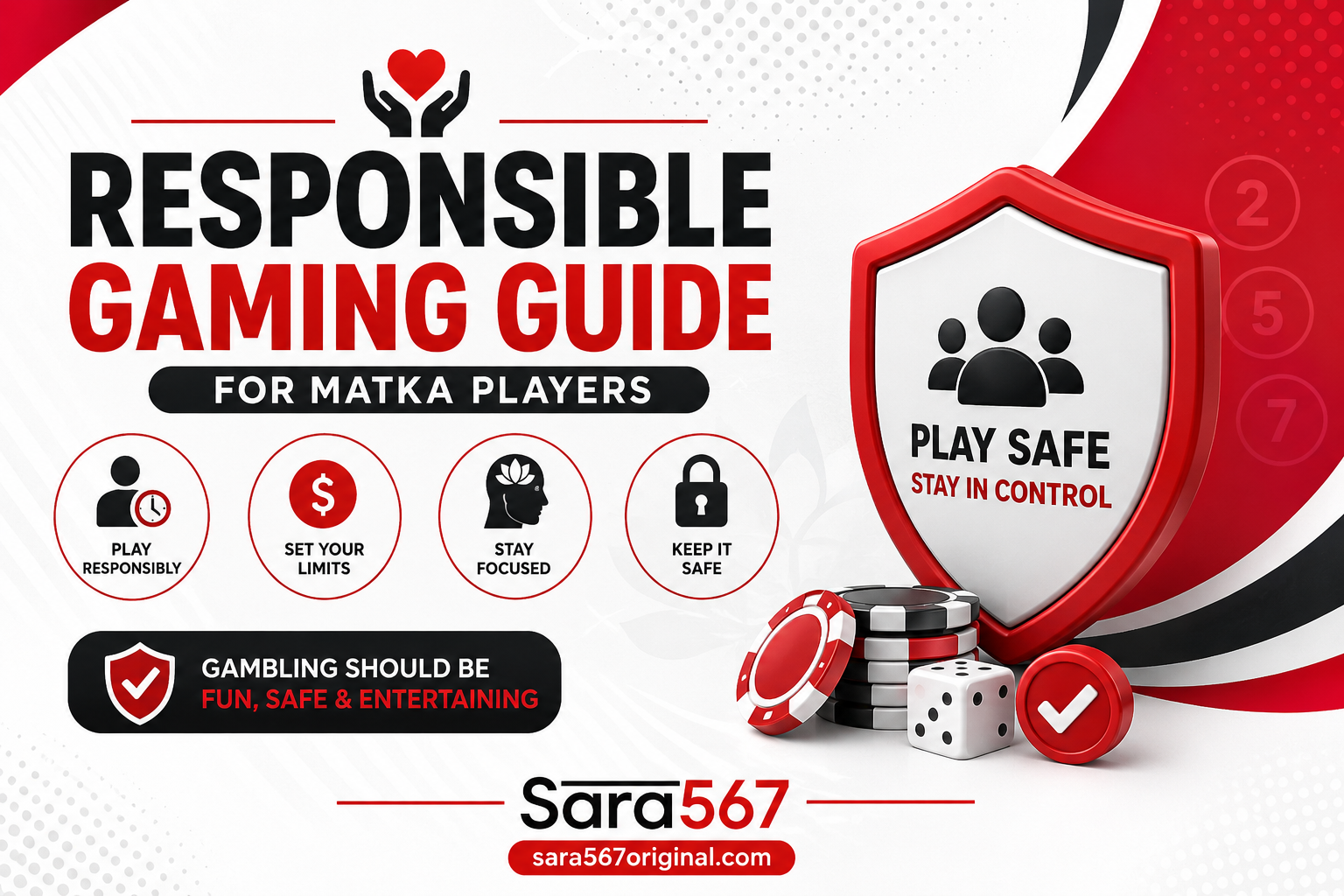
Involving yourself in any kind of gambling, even traditional games such as Matka, involves a strong dedication to safety for yourself and fiscal discipline. Though many consider gambling some form of entertainment, there are real dangers to the financial system that cannot be overlooked.
Responsible gaming is recognizing the dangers prior to making any decision. Gaming should not be at the expense of important costs of living, savings for emergencies and personal relationships, or general well-being. Making gaming enjoyable and secure is about knowing your personal limitations and accepting that any result is essentially unpredictable.
What Is Responsible Gaming?
In the simplest sense, responsible gaming is the act of ensuring complete control of your finances, time and your emotional condition whenever you play gambling games. It's a method intended to limit risks and keep gaming from affecting your everyday routine.
Responsible gaming means:
- Knowing how to understand the Nature of Chance: Acknowledging the fact that outcomes of games are totally in flux.
- Set Financial Limits: Setting strict budgetary limits prior to engaging in any activities.
- Planning Time Smartly: Choosing particular time blocks and adhering to these.
- Saving Essential Funds: Using only disposable income, never money allocated to meet household expenses.
- Make rational decisions: Refusing to let frustration, anger or enthusiasm influence your choices.
- Accepting Outcomes: As entertainment costs instead of debts that need to be repaid.
- Regularly taking breaks: Stepping away so that your mind is free.
- Understanding when to stop: Knowing when it is the best time to leave the premises completely.
Important Note: Responsible Gaming is not an approach to boost your chances of winning or to evade the inherent game's randomness. This is simply a risk-management strategy to guard your financial and personal health.
Why Responsible Gaming Matters for Matka Players
Matka, as well as other similar games based on numbers, is based entirely on chance. Since human psychology is naturally inclined towards optimism and patterns, it's easy to underestimate the risk associated with the game. The practice of forming responsible Matka practices can help guard against common traps.
1. High Financial Risk
The biggest risk to be concerned with is the possibility of financial loss. With no budget in place, it is possible for players to spend substantially more money than initially planned.
2. Unpredictable Outcomes
Any amount of historical analysis will alter the randomness of the future draw. The expectation of a particular outcome frequently results in disappointment and poor decisions.
3. Emotional Volatility
A loss that is experienced can cause emotions of disappointment, while a win may result in confidence issues. The emotional extremes can impair the ability to make rational decisions and can lead to impulsive actions.
4. The Trap of Chasing Losses
A naive desire to recoup the losses of previous years by playing is among the most effective ways of escalating the risk of financial loss.
5. Impact on Daily Life
Inadequate gaming habits could spill into obligations at work, family time and relationships with friends that can lead to tension and emotional exhaustion both for the participant and the loved ones.
Set a Personal Budget Before Playing
Financial discipline is the primary base of any gambling tips. Prior to engaging in any gambling exercise, set up a specific budget for entertainment that will fit with your overall financial plan.
Total Monthly Income
-
Essential Obligations (Rent, Bills, Groceries, Savings) [DO NOT TOUCH]
-
Disposable Income (Dining out, Movies, Hobbies)
-
Small Entertainment Budget [Maximum Gaming Limit]
Practical Budgeting Rules
- Use Extra Income Only: Make use of disposable income only. You should only allocate money that you are able to comfortably spend without altering your standard of living.
- Avoid Essential Expenses: Make sure you don't use money to pay for mortgages, rents, or utilities. They can be used for groceries, health care, or educational expenses.
- Don't Borrow Money: Never take loans, take credit lines or borrow from family and friends for gaming expenses.
- Save Your Money Separately: Store your funds for entertainment in a separate money account or wallet, so that you don't misplace funds into the funds for living costs.
- Follow the Stop Line: Once you have reached your limit set by the manufacturer, stop immediately. Absolutely no exemptions.
Set a Time Limit
Responsible behavior involves taking care of your time as carefully as you manage your cash. In the event that time is not properly managed, the quality of decision-making decreases.
- Create a timer: Choose what time frame you'll be using, e.g, it's 15 or 30 minutes. Then, put it down when the alarm goes off.
- Get rid of screens: Do not refresh pages constantly or check the results all day long.
- Make Life-Obligations a priority: Do not let gaming interrupt your work schedule, school and physical fitness or time with family.
- Maintaining other hobbies: It is important to keep up with activities like reading, sports or outdoor pursuits, as well as games, which is why it's only a minor, occasionally occurring, time-consuming activity.
Never Chase Losses
"Chasing losses" is among the most risky behaviors of the game. It occurs when a person seeks to recover money they lost through playing on or increasing the stake.
Knowing the difference between the damaging process of chasing losses and the importance of a proper mindset to ensure your safety.
The Destructive Cycle
Planned Limit > Loss Occurs > Emotional Reaction > Overspend > Deeper Loss
When you let your emotions guide your decisions, even a minor mistake can trigger impulse-driven, urgent spending which usually leads to greater financial burden.
The Responsible Approach
Planned Limit > Loss Occurs > Stop Immediately > Accept Result > Resume Daily Life
When you adhere to the original idea, agreeing with the result leaves you in complete control of your finances, and maintains your tranquility.
Avoid Emotional or Impulsive Decisions
Your state of mind is a major factor in what your decision-making process is. If strong emotions dominate and logic is put on the back to take a back.
Pay attention to your actions whenever you're experiencing:
- Anxiety or Stress: Utilizing gaming to relieve stress and anxiety can exacerbate the existing issues.
- Fury or anger Anger or Frustration: Emotional anger often leads to extravagant spending.
- Insanity: Playing for fun may lead to self-destructing spending, without monitoring.
- Overconfidence: A brief streak may cause you to feel like you're invincible making you want to push past the limits you set for yourself.
If you are experiencing any of these factors, you should stop and immediately feel relaxed and clear.
Understand That Results Are Not Guaranteed
One of the fundamental principles of gambling consciousness is to recognize that the past does not determine the future outcomes of random events.
Informational platforms, such as Sara567 and Sara567, provide historic Matka charts as well as past results strictly as reference data from the past. These archives document what's already happened, they're neither predictive nor indicators of the future.
Red-Flag Claims to Ignore
- "Guaranteed number of winners"
- "Fixed charts, or guaranteed-shot prediction"
- "100% risk-free strategies"
- "Guaranteed profit formulas"
Each outcome of the game of chance is totally independent of prior outcomes. Consider all data from the past as documents of information, not as any financial advice or forecasting shortcuts.
Recognize Warning Signs of Gambling Problems
It is essential to be aware of your symptoms early. Even though one symptom does not necessarily indicate an immediate trouble, being aware of numerous recurring patterns could be an indication to review your routine.
Common Warning Signs
- Budget Overruns: You will often spend more than you anticipated.
- Time Drift: Spending a lot longer playing than initially planned.
- The loss of control: You find it challenging or even frustrating to quit when you must.
- Problem: Whether you are at work or spending your time at home thinking of gaming.
- Repetition of Chasing: Constantly trying to recover money that you've forfeited.
- Loaning Funds: Demanding credits or loans to finance gaming.
- Confidential: Covering your activity or your spending habits from the family and friends of yours.
- Gaming for emotional reliance: Use gaming as your main method of deal with anxiety or bad moods.
- Not Taking Care of Your Duties: Allowing the family, personal or commitments to work slip away.
Take Regular Breaks
Removing yourself from gaming allows you time to get back in the perspective of your life and look at your actions in a more objective way.
Ways to Clear Your Head
- Pause your screen-free breaks: Switch off notifications and set your phone off for the rest of the day.
- Concentrate on health: Go for a stroll, work at home, or just spend some your time outside.
- Connect with family: Give the time of your life for your family and close your friends.
- Spend money on hobbies: Get involved in creative pursuits, reading films or.
Gaming shouldn't be the sole entertainment source or your primary activity.
Keep Gambling Away From Essential Expenses
In order to keep your finances secure, you must establish clear boundaries that cannot be negotiated. The essential living expenses are always first.
| Expense Category | Safe to Use for Gaming? | Priority Level |
|---|---|---|
| Rent / Housing | No | Critical Foundation |
| Food & Groceries | No | Critical Foundation |
| Education / Tuition | No | Critical Foundation |
| Medical Expenses | No | Critical Foundation |
| Utility Bills | No | Critical Foundation |
| Emergency Savings | No | Critical Foundation |
| Disposable Budget | The only exception is within the strictest of limits | Low / Optional |
Responsible Gaming Checklist
Make use of this checklist regularly to review your game habits and ensure you are staying within the safe limits:
| Self-Assessment Question | Yes | No |
|---|---|---|
| Do I have a specific budget before I begin? | ||
| Do I have a specific date in this session? | ||
| Do I use only the money for entertainment that is disposable? | ||
| Have I avoided all use of the borrowed funds? | ||
| Are I willing to take loss without having to chase them? | ||
| Do I have the ability to walk away easily when my maximum has been met? | ||
| Does my everyday life remain completely free of gaming-related distractions? | ||
| Are I taking frequent breaks from my screens? |
If you answered "No" to a few of the above questions, then it's an appropriate time to stop, think about the situation, and perhaps stop for a while.
When Should You Take a Complete Break?
Self-awareness refers to knowing that a pause of a few seconds doesn't suffice. Consider taking an extended or complete break when you encounter one of these:
- Gaming creates financial stress, or can lead to indebtedness.
- Love, romance or social connections can be tension-filled.
- It is difficult not to feel fear, sadness or irritation over playing.
- It is a constant struggle to reduce the time you spend or your money.
- There is a strong, difficult-to-control desire to retrieve the funds you've lost.
Being aware of these warning signs can help you to gain control over your money, time, and your overall health.
Responsible Information Practices at Sara567
Platforms such as Sara567 offer archived charts of historical markets, results, and updates only for informational reasons.
- Informational Use: All information such as charts, data, and graphs must be taken as historic records.
- The archived charts aren't predictive and do not provide any guarantees for the future.
- For adults: Only participation in any game is to be played by adults who are legally able (18plus).).
- Personal Responsibility: Readers must be able to rely solely on their own sense of judgment, analyze the risks of investing in a particular way and set the strictest personal boundaries.
Conclusion
Responsible gaming is a must in order to keep any gambling activity secure and well-balanced. Keep in mind these basic rules:
- Make sure you set strict guidelines for your time as well as your budget prior to beginning.
- Secure the essential money needed for everyday living costs and savings.
- Do not chase the losses. Accept them as a cost of leisure entertainment.
- Regularly take breaks to keep focus and clear on your daily issues.
- Know the warning signs that are early in the day and get help or move away if necessary.
If you keep gaming with a clear mind, you'll protect your money, your relationships as well as your security.
Disclaimer: Gambling is a source of risks to your finances and the results cannot be guaranteed. This information is solely to educate and inform and is not intended to be legal or financial guidance. The reader is advised to adhere to the laws of their respective locales and to ensure they're of legal standards of age (18or older) prior to participating at any type of gambling activity.
Frequently Asked Questions
1. What exactly is responsible gaming?
Responsible gaming is the practice of having complete control over your time as well as funds when you engage in casual games. This means understanding that the outcomes depend on luck and setting budgets that are non-negotiable to safeguard your vital living resources while ensuring that gambling does not interfere with your life and health or financial security.
2. How do Matka players create a personal budget?
Matka players can establish an appropriate budget after evaluating their income for the month while ensuring they cover the most essential costs first, such as groceries, rent or medical bills and savings. A small percentage of the remaining entertainment money should never be allocated to gambling, and this limit should be adhered to.
3. What are the reasons why players should not chase losses on gambling?
Players should be careful not to pursue losing money because it can lead to a mental spiral of excessive spending. The attempt to quickly recover losses usually results in more financial loss and a lot of emotional anxiety. The acceptance of losing money as an expense for entertainment helps you stay at ease.
4. What are some common warning indicators for gambling addiction?
The most common warning signs are the tendency to spend more money or time than you planned, taking out loans to finance gaming, not paying attention to your family or work obligations or hiding your activities from family members, experiencing constant stress or the urgent desire to recover the money you've lost. Being aware of these warning signs can help protect yourself from serious injuries.
5. How often should a person stop gambling?
You should immediately take a break when gaming can cause financial strain, family tension, workplace disruptions and emotional stress or when you are struggling to adhere to self-imposed limitations. Resetting the way you think also protects your personal wellbeing.
SEO expert and digital content researcher tracking market trends, data verification, and informational guides across digital platforms.