
Understanding Number Occurrence in Historical Records
Understanding Number Occurrence in Historical Records
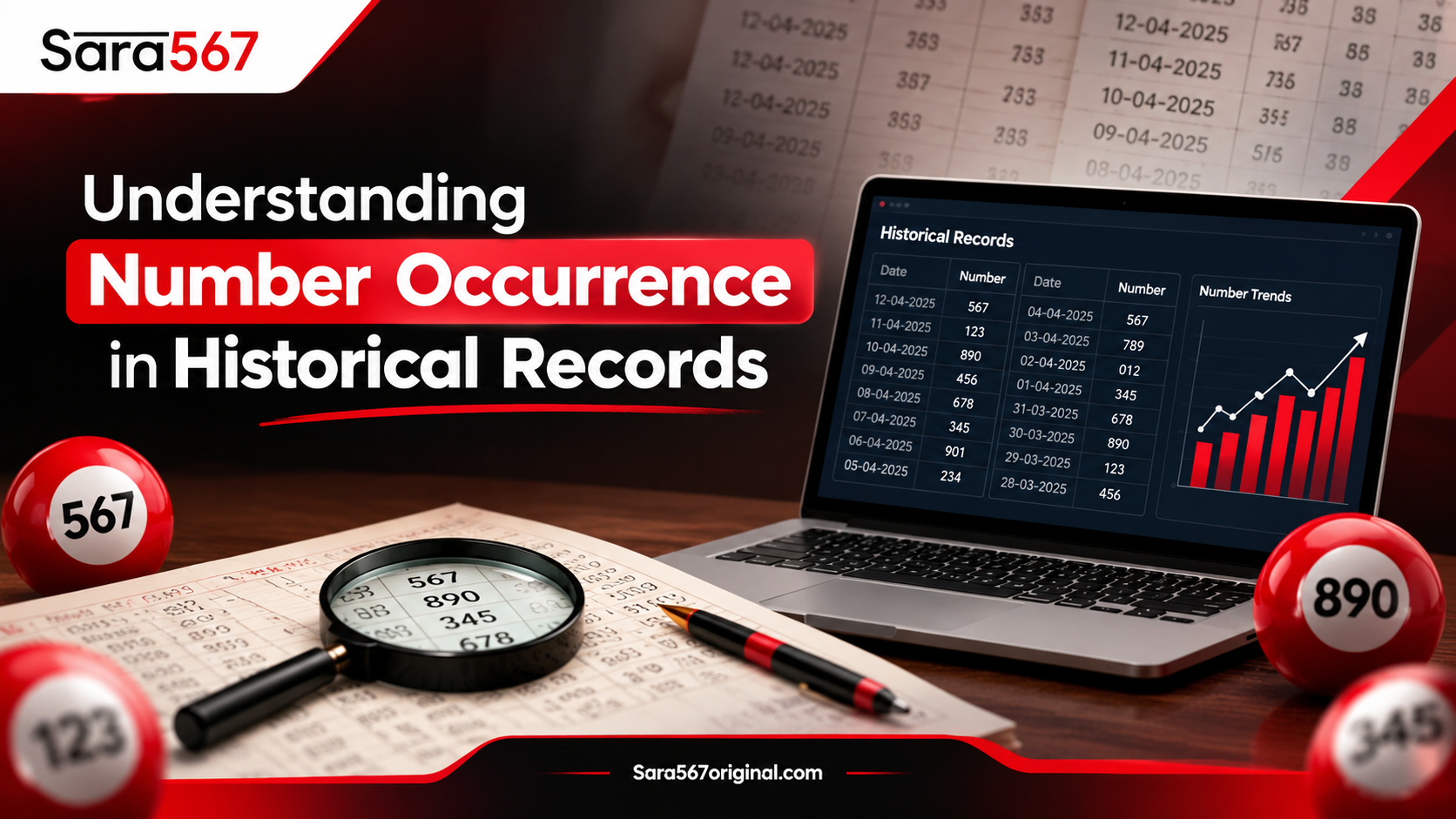
Archives and charts keep track of the recorded data on specific calendar dates. As a reader new to the Matka scene, the first step to learning how to read Matka charts is understanding the statistical language used to organize the information. In a set of records, matka number occurrence defines the simple action of a specific number appearing on a given line of historical data.
Learning terms like occurrence supports the reader in organizing their thoughts when analyzing historical series. For those aiming to find out past results in Matka, the occurrence of a number in a dataset is an ideal method to separate the information objectively and systematically.
Understanding Number Occurrence
Before explaining what matka number occurrence means, it is easiest to break the word down and review its meaning. An occurrence is essentially a number’s appearance in a single line of the archived records on a certain specified date. If a certain digit appears in more than one line, all separate appearances need to be tallied as different occurrences.
Differentiating frequency and occurrence is essential for the proper analysis of historical series. In the simplest terms, their meanings are as follows:
- Occurrence: A single appearance of a digit or pair where a number is noted as having occurred.
- Frequency: The overall occurrences of a number combined for a certain continuous period.
Confusing the terms may create unnecessary difficulties when tallying the numbers.
How to Identify Occurrences in Historical Records
A novice reader may struggle to find out the occurrences needed for Matka data analysis. Researchers can use a consistent method to examine historical records and count how many times a specific number appears in the selected dataset.
- Select a market: to use as the basis of the research (Kalyan, Milan, etc.)
- Select date range: Set a certain date range for the data (e.g., 1-20 June 2022)
- Open the required historical records: Charts and logs for the chosen market
- Set a reference point for the digits: Single/Pana/Jodi numbers
- Make a note of every appearance of the number: Every date when the figures were marked
- Ensure chronological organization: Every Matka entry should remain in order
When cross-checking occurrences, ensure that date ranges remain the same to prevent errors
A Fictional Example of Number Occurrence
Before continuing to the next section, it is best to define the term matka number occurrence with a simple example. Examine the following 12-day archive:
| Date | Recorded Number | Occurrence Status |
|---|---|---|
| 2 June | 6 | Appeared |
| 4 June | 3 | Appeared |
| 7 June | 6 | Appeared |
| 10 June | 8 | Appeared |
| 13 June | 6 | Appeared |
| 15 June | 1 | Appeared |
In the provided example, the occurrences of the digit 4 are shown. As 4 appeared three times, the data shows that 1 June, 6 June, and the 12th of June were the dates when the number appeared. The example set remains fictional, as no real results are used.
Differentiating Occurrence and Frequency
It is also helpful to distinguish between occurrence and frequency. Refer to the table below for a clear definition and an example:
| Term | Meaning | Example |
|---|---|---|
| Occurrence | An individual appearance within a single record entry | Number 4 appears on 1 June |
| Frequency | Total count of appearances within a defined dataset | Number 4 appears 3 times in June |
The Importance of the Date Range
All occurrences are dependent on the researcher’s selected date range. A certain number may have multiple appearances when a 15-day series is considered, but a longer sample of 30 days may show varied results.
When checking the number of times a digit appears in the Matka logs, always take note of the start and end dates of the series. Comparing two date ranges that do not match will also affect frequency and produce erroneous results.Comparing a Kalyan chart from the 1st with a Milan chart from the 15th may may produce misleading results because the data comes from different markets and dates.
Checking Matka Occurrences on Sara 567
When it comes to reading historical data records, using the right website to check the data is always essential. Sara 567, a website that hosts daily results, charts, and Jodi and Pana logs, has all of Kalyan, Milan, Sridevi, and Rajdhani logs in order to make sure that Matka record checking appears correctly.
When looking for number occurrence Matka information on Sara 567, keep the following points in mind:
- Make sure that the correct market name is chosen
- Always tally within the chosen date range
- Always select the appropriate field of research (Single, Jodi, or Pana)
- Double-check the dates and keep a sheet in order
Conclusion
In short, learning occurrences of numbers in the Matka records provides a proper method of cross-referencing data. Keeping the dates the same, separating occurrences, and avoiding mixing the numbers from different markets are all a part of standard Matka data logging practices.
Readers can visit Sara 567 to learn more about historical Matka results and review past market records in an organized format.
Frequently Asked Questions
1. How is a number’s occurrence defined in historical records?
The occurrence is a single appearance of the number in historical references across the records.
2. What is the difference between occurrence and frequency?
Occurrence refers to a single instance of a number appearing in a record. Frequency describes the total number of times that number appears within a selected date range or dataset.
3. How do I check the occurrence on different dates?
The researcher needs to specify a market and a date range to organize their occurrences in chronological order.
4. Can previous occurrences of a number reflect chances of it to appear again?
No, occurrences are just historical records of figures appearing; Matka data logs do not show information on “hot”, “best”, or “due” numbers.
5. Why is it important to tally occurrences on the same range of dates?
As occurrences are individual appearances of the figures, different data lengths can show drastically different data for different dates.
Notice of Responsible Betting
Satta Matka is an entertainment game involving financial risks. Historical data is provided for informational purposes and makes no guarantees or predictions. This page is intended for audience 18+. Please consult your local legislation if any of the provided information contradicts it and do not risk your money.
SEO expert and digital content researcher tracking market trends, data verification, and informational guides across digital platforms.