
How Online Result Pages Display Updated Information
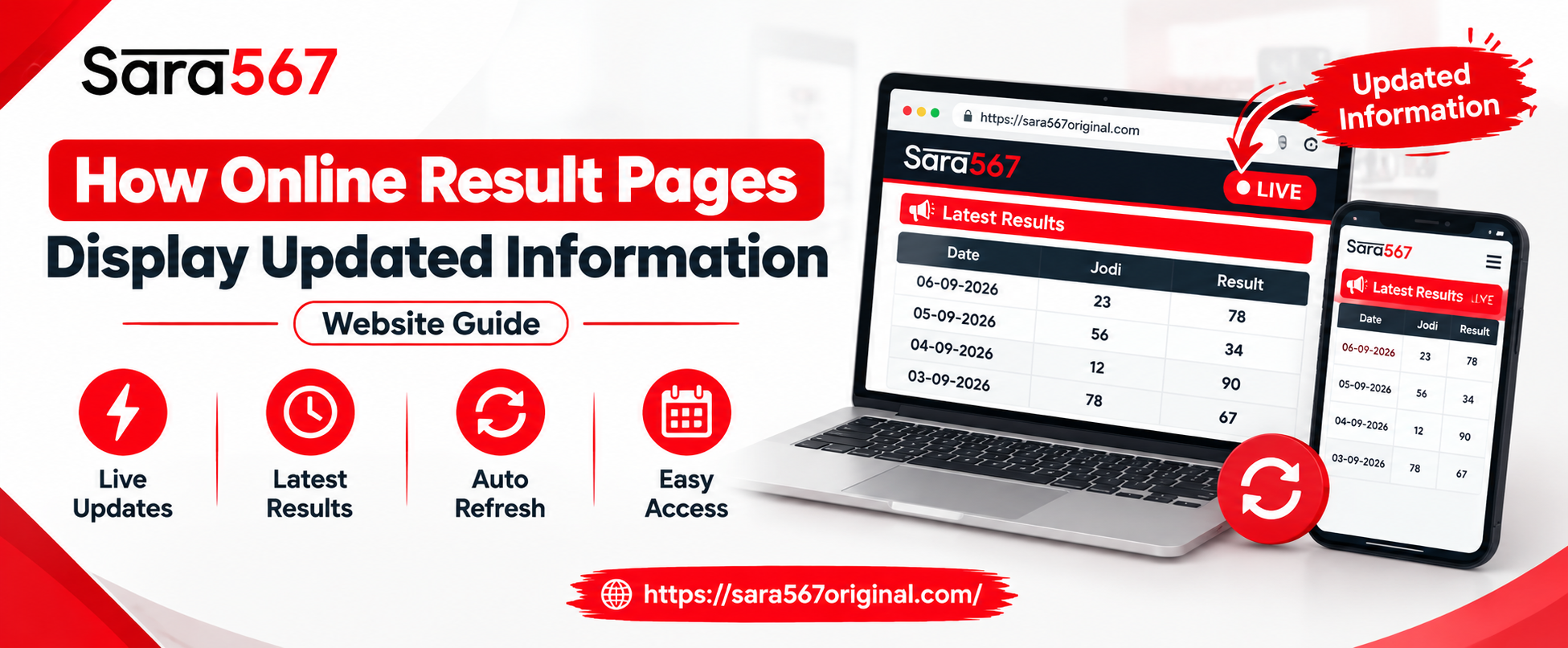
A result page might appear straightforward at first, but it is usually an array of information displayed all at once. The result page may show the current date, several markets, table of results, tables with historical data and links to navigation.
If you don't know what to search for there is a chance to look at an old historical table, and then mistake it for the current results. Understanding how online pages are structured matka result updates make it simpler to differentiate the latest declarations from those that have been archived.
What Is an Online Result Page?
A result page online is a dashboard that uses technology to show information organized groups. According to the website that you go to, one webpage could include live data, logs from the past and archives of multiple weeks in a single display.
The majority of pages arrange their contents into visual blocks that are distinct:
- Header Section: Describes the navigation of the website and its primary markets by categories.
- Present Result Cards: Highlight the latest announced figures for sessions that are currently in use.
- Date Stamps: Highlight the specific date of the calendar that the depicted figures belonged to.
- Historical Archive Blocks: The list of older records is further down for the past to information.
What Does an "Updated Result" Mean?
If a web page declares something to be"updated" or "updated result," it just means that new data was included on the website to support a certain market.
It is important to realize that "updated" doesn't automatically mean"instant" or "live. The rate of updating is dependent on the time when site administrators record the inbound details. A newly updated entry is a reflection of recently released information, however, it is always indicative of a particular drawing time that has already been completed.
How Updated Information Is Usually Displayed
Each website design its user interface in a different way but the vast majority of websites rely on consistent visual clues to display the latest entries.
- Top Placement: Newest announcements tend to be pinned close to at the top of the homepage.
- Bold Formatting: New models often make use of bigger fonts or colours to differentiate themselves from older ones.
- Date badges: The clear markers let you know if a date is applicable to the present day or to a prior day.
- Status Labels: Text marks such as "Open Declared" or "Complete" indicate which portion of drawing sequence is accessible.
Understanding the Date on a Result Page
Verifying the date stamp should be the first thing you do before you read any numbers on the screen.
Since many result sites keep historic records on the homepage, along with changes, looking at a table without examining its header may lead to misinterpretations. The page could have three different dates displayed at the same time:
- Today's Date: Apply to recently updated or current sessions.
- Yesterday's Date: Retain to be a quick reference when new sessions begin.
- Archive Dates: They are listed in tables that are chronological for the older logs from the week.
If the date next to the title of a market doesn't correspond to the calendar day of today and the number displayed is related to an earlier draw.
Understanding the Market Name
Market names serve as labels to keep the distinct draw periods. Each market runs on its own timeline and keeps their individual independent record of its history.
Be sure to confirm that the title of your session matches the content you want to see. A case in point is that an update in a header for a morning session is not linked to the header for an evening session in the same place. Making figures from multiple market segments as records that are related is among the most frequent mistakes that beginners commit.
Open, Close, Jodi, and Pana Information
Results cards online break down draw entries in standard abbreviations:
- Open Result: A three-digit panel as well as the single-digit number declared at the beginning of the session.
- Closer Result: Three-digit panel as well as the single-digit number declared after the close of the session.
- Jodi: The two-digit central number that is created by putting the single digit that is open and close single digit side-by each other.
- Pana/Panel: A 3-digit combo that adds into a single number.
Information Current in comparison to. Historical Information
The way pages transfer data from active cards to long-term charts helps you read your data accurately.
| Information Type | Main Purpose | Typical Placement |
|---|---|---|
| Current Result | Shows the latest available data available to date | The top of the homepage, or active cards |
| Previous Result | The latest figures from yesterday are displayed to give an overview. | Below or next to present cards. |
| Historical Chart | Archive data for multi-weeks or months | Pages dedicated to charting or table tables on the page |
| Weekly / Monthly View | Records of groups are divided into seven-day or 30 day blocks | Categorized sub-pages |
How Result Pages Show That Information Has Changed
As new data is added to on a website, the design changes to reflect it. Changes are usually noticed through a variety of ways:
- Blank Fields: Fill in Slots that were previously depicting the blank space or dashes shows the numbers that are declared.
- Status Flags Change: The label that reads "Pending" changes to "Open Available" or "Finished."
- Changes in Numbers: After this session is over, the complete numbers will be moved to the history archive section permanently in order to allow room for following day's slot.
Why Readers Should Check the Date Before Reading a Result
There are many documents, particularly when the information from the past is displayed beneath the section currently being read. Prior to reading the chart or numbers begin the routine of checking the following:
- Date: Confirm that it's the day of the week you are concerned about.
- Market: Verify the name of the session.
- Type of Result: Determine if you're viewing the output as Close, Open or a combined Jodi output.
- Status: Determine whether the session is currently active or has been archived.
This quick check will prevent confusion while browsing through busy websites.
How Historical Charts Relate to Updated Result Pages
Updated entries aren't within"current". They don't stay in the "current" section forever. When a session is over the data is moved into tables for long-term use.
Current Result → Daily Log → Historical Archive
In this case, for illustration for example, our Sridevi Matka chart guide describes the way daily outputs are recorded and sorted chronologically into weekly grids that are arranged over the course of the course of.
In the same way, our break-down of our breakdown of the Rajdhani Day chart guide clarifies the operation line between a daily results card and an ongoing chart page. If you're curious to know the way entries appear when grouped throughout the month, check out our comprehensive overview of our month-long Kalyan chart. For a variety of charts directly, check out the main chart library of the Sara 567 library.
Example of Reading an Updated Result Page
Here's a quick idea of what an update block that is standard appears on the screen:
Combined Jodi: Recorded 2-Digit Pair
When you look at the entire Block from the top of it to base tells you immediately three things that are immediately apparent: the title of the market and the precise day it is a part of and the closing and open sections are current.
Common Mistakes When Reading Updated Result Pages
Beware of these easy traps while using online portals
- Ignoring the date header: In other words, assuming that the highest number that appears on the screen will reflect the draw of today without verifying on the day stamp.
- Ignoring the name of the market: Reading figures under a headline for the evening market when searching for a daily market update.
- Mistake: Thinking "Updated" Means Guaranteed Real-Time Information: Expecting that pages will refresh on their own without taking into account the usual logging time delays for websites.
- A common mistake: Is confusing the current card with links to archives clicking on a week-long historic chart when searching for the single-result card of today.
- Five Mistakes: Treating Historical information as a prediction Thinking that looking at recent numbers will predict what's going to happen during the coming session. Previous entries provide historical information only.
Conclusion
Understanding how online Matka result pages display information makes it easier to read them correctly. Always check the date, market name, result status, and result type before considering any information as current. This helps you avoid confusing an older historical record with a recently updated result.
Remember that updated results are records of draws that have already taken place. They should be viewed as historical information, not as a way to predict future results. By reading result pages carefully and using the information responsibly, you can better understand how current updates, daily records, and historical archives are organized.
Frequently Asked Questions
1.What are the available Matka results? Online Matka update results are new released data entries on dashboards of the site to display the most recent numbers declared in specific draw times.
2.How do I know whether a page with a result contains up-to-date data? Check the date stamp that is next to the title of the market. If the date is in line with today's calendar date, then the data is a reflection of the present time.
3.What is the significance of the date in an online page of results? As websites provide both recent releases and old records for the same website, confirming the date can prevent mistakenly assuming an archive entry from the past to be a record of today's date.
4.What's the distinction between a contemporary outcome and an historical one? The current results focus on the newly announced numbers in the current session the historical results are an unchanging record that is stored in the long-term archive table.
5.Are online results updates a guarantee of that future results will be the same? No. The updated results show draw results that already took place. Since each draw session is an independent occasion, previous updates can't be used to forecast future results.
Responsible Information Use
A practical and grounded perspective when checking the online results pages is vital:
- Use information as historical data The updated records record things that happened before. They have no predictive value in the future for draw.
- Be aware of the financial risk Real-money and chance-based gaming actions involve a real risk to your financial health.
- Establish clear personal boundaries Don't spend any money that is to cover essential expenses for life such as housing or other family necessities. Avoid chasing losses.
- Be aware of local laws: Make sure that you're aware and in compliance with the legal laws governing online gaming websites within your area of jurisdiction.
Knowing how result pages online show updated information boils from understanding the layout thoroughly. Through checking the dates and stamps, as well as confirming that the title of a market is correct, and understanding what the differences are between current results and archives from the past and you will be able to browse any page of results without a doubt. Make sure to view the latest numbers as a record of the past and utilize online portals solely for clear, reliable information.
SEO expert and digital content researcher tracking market trends, data verification, and informational guides across digital platforms.