
How Date-Wise Matka Records Are Organized Online
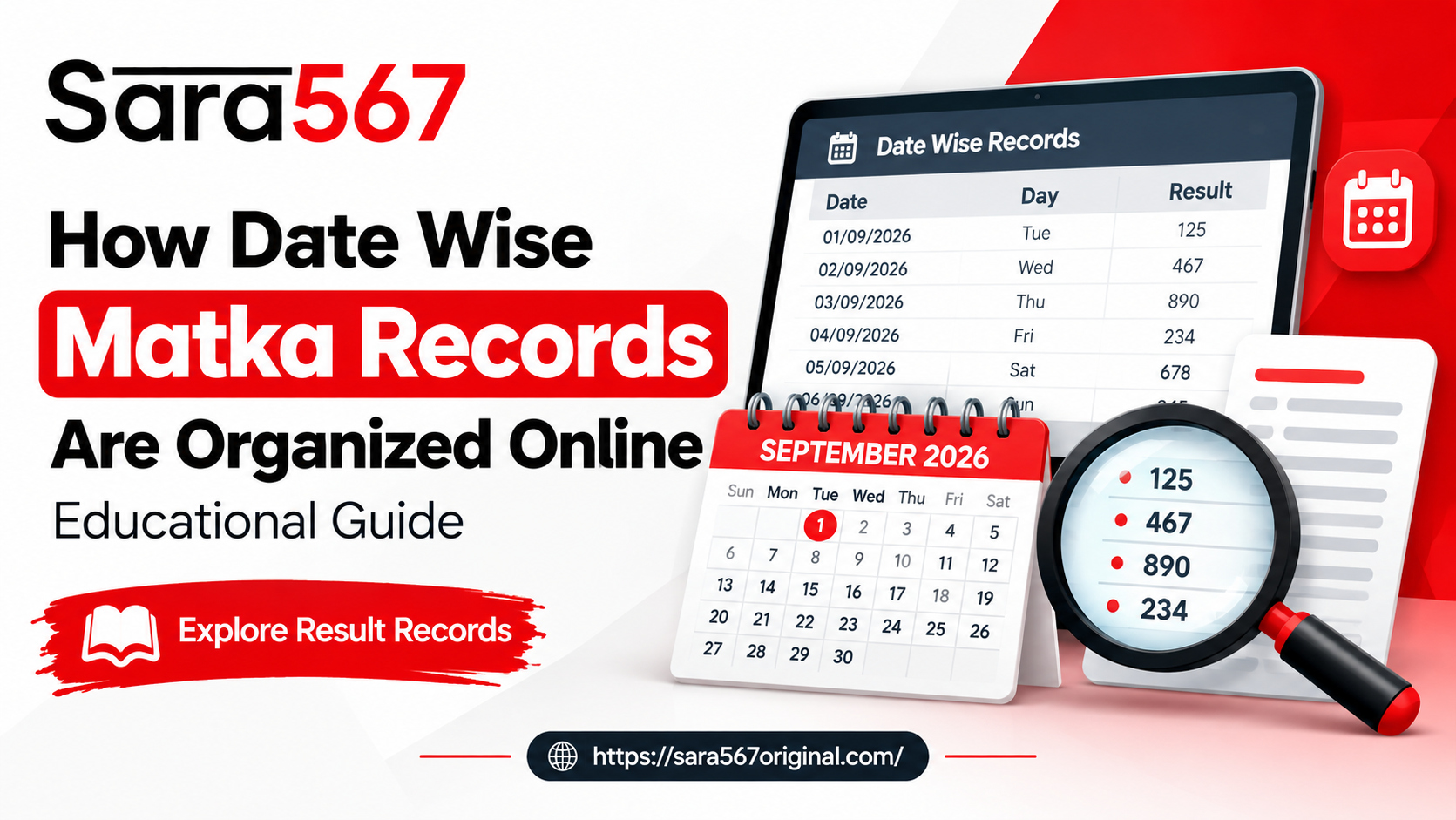
In the process of searching online result platforms, encountering huge collections of old data is not uncommon. Without any clear framework the process of finding an exact data point from the last week, the month before, or the previous year could take a lot of scrolling.
In order to solve this issue Digital portals arrange the historical data date-wise. The chronological arrangement of records by the calendar day turns complicated databases into simple, searchable libraries.
This article explains how date-wise records are organized online, the best way to use calendars and tables of archive in order to find gaps in entries, and the best way to look through historical records using platforms such as Sara567Original.com responsible.
What Are Date-Wise Matka Records?
Matka data that are date-wise have been previously released results as well as informational logs that are strictly organized by the calendar dates on which they took place.
Instead of listing the numbers in a continuous fashion as a text feed, sites assign each entry a unique datestamp and timestamp (e.g. 01/09/2026). It creates an organized archive in which each entry is directly tied to the month, day, and year.
Why Are Records Organized by Date?
Sorting information about historical events in accordance with date provides a number of important advantages to readers:
- Speedier Information Retrieval: Users can directly jump to the desired date without having to read through irrelevant articles.
- A Clear Chronological Context: The historical entries have a logic-based timeline making it easier to monitor records day-by- each day.
- Separation between Past and Present: Structure entries by dates helps users avoid confusing older archives with new updates in status.
- Simplified Comparison: Organizing data by date enables users to examine historical logs side-by- with regard to monthly or weekly perspectives.
How Date-Wise Records Are Usually Organized
Websites use a wide range of tools for structuring data by date, based on the type of information they display: either long-term or short-term records:
1. Daily Result Pages
The Daily Record page concentrates only on a calendar day. The page displays every session entry, updates timestamps, as well as reports on status during the 24 hour period.
2. Monthly Archive Charts
Monthly records consolidate an entire month's worth of data into a single grid table. Each month's days are listed vertically on the left column. Similarly, particular session windows or time slots span over the top row.
3. Calendar Selectors
Most modern platforms have the ability to interact with a calendar widget. The user can click on a calendar, choose one day and then the webpage will refresh to display calendar entries that have been archived for the day.
4. Dropdown Filters and Archives
Dropdown menus enable users to select records to filter by selecting the month or year in a dropdown menu immediately separating that specific time period from the other database.
Understanding a Date-Wise Record Page
If you go through a record with a date page, you'll come across these essential structural components:
| Page Element | Purpose | Why It Matters |
|---|---|---|
| Date Header | Finds out the precise date of the calendar | It confirms the exact date and time of the entry |
| Category Title | Finds out the particular market or board | Verify that you're in the appropriate class |
| Result Panel | It displays the figures published or the status | This is the main information published |
| Update Timestamp | It displays the exact updating time. | Confirms that the record was finally completed |
| History Table | This list contains entries from prior consecutive days | Access to current historic entries |
| Navigation Controls | Buttons that say "Previous Day" or "Next Day" | Allows users to move seamlessly across the timeline of archive |
Step-by-Step: How to Explore Date-Wise Records
Use this easy guide to search for and read certain records with a particular date in an online search portal:
Step 1: Launch the relevant Results Section: Select the market or category that you would like to investigate.
Navigate to the main directory, or a particular market section on the site.
Step 2: Search for the Date Selector, or Archive Area: Search to find calendar widgets or drop-down menus or archives hyperlinks.
Locate the control panel for navigation, typically located at the center of the board, or on an individual sidebar.
Step 3: Choose the required date: Choose the appropriate date, month, or year.
Utilize the calendar picker, or dropdown menu to choose your precise date (e.g. the 01st of September in 2026).
Step 4: Examine the page heading: Confirm that the header is in line with your choice.
When the page refreshes take a look at the primary title to confirm that it is showing data for the date you selected.
Step 5: Go over the published information: Examine the tables cells or cards with care.
Take note of the entries displayed, be sure not to mix adjacent entries with nearby column headliners.
Step 6: Review the Update Information: Verify system confirmation details, if they are available.
Find timestamps, or modification markers to confirm that the record was created in the archive of the system.
Step 7: Go back to the Archive for other dates: Utilize archives links or date pickers to change dates.
If you want to view a date that is different make use of the navigation control or re-set the date selector to select a different date.
Daily Versus Monthly Record Organization
Based on the time you're searching from, websites provide information in various structural styles:
| Record Type | Typical Purpose | Best Used For |
|---|---|---|
| Daily Record | Shows all entries of one calendar day | By checking specific, thorough session information for the day. |
| Weekly Record | Groups consecutive entries across 7 days | Looking back at recent trends, or catch up with entries from the past week |
| Monthly Archive | Completes a month's worth of data into a grid-like table | Scanning long-term records of historical record thoroughly with one glance |
| Historical Archive | Data stored for multi-year storage is organized according to the year and month | Historical documents that are long-term, older documents |
How to Find a Specific Date
If you're looking for an item from a certain previous date, follow these methods:
- Utilize the Calendar Picker Use the Calendar Picker: click on the calendar widget. Navigate towards the preferred month or year then select the precise date.
- Make use of Date Filters: Select the year and month from dropdown menus in order to narrow the pages of archives that are long.
- Browse Archive Listings: Go to the website's "Archive" section where links are listed chronologically, sorted by month.
- Utilize Internal Search: Enter the exact format for dates in the search box on the site If it is you have it.
What If a Date Has No Record?
Sometimes, you might encounter an event date for which no data is provided or the record display appears empty. Some of the reasons for this are:
- Holiday or non-operational Day: The session was not planned or conducted on this day.
- Awaited Publication: The system archive on the date of publication is currently undergoing maintenance or is not completed.
- The incorrect date was selected Incorrect Date Selection: You chose a future date or date prior to when the platform commenced record-keeping in the particular category.
- Moving into Deep Archive: On some websites, old daily pages get moved periodically into monthly tables, rather than separate daily URLs.
If a record is not present Check the header for dates first before making presumptions about why the data cannot be found.
Common Mistakes to Avoid
- The wrong column: With large grid charts for the month of June It is very possible to misread an entry that is in an adjacent column or row.
- Confusion of Months and years: Choose "September 2025" instead of "September 2026" when using calendar dropdowns.
- Confusion between historical entries and live Updates: Reviewing the archived daily records page as if it's a record of the current actual action.
- Unaware of Page Refresh: Visiting archives and not clearing cached pages could cause obsolete versions of calendar pages to appear.
Historical Records Are Not Predictions
It is essential to recognize that the records based on dates are just historic records. They provide information about what was released at specific times on dates in the recent.
The ability to organize entries into daily, monthly or weekly tables allows databases to navigate and confirm However, the historical records do make predictions, forecasts, or ensure future events. The past records are used as a reference library that is static.
Also read: https://sara567original.com/blog/sara-567-charts-explained-for-new-users
Conclusion
A date-wise structure makes searching results archives online simple and effective. With the help of calendars and selectors and examining monthly charts with care as well as checking headers for dates, as well as understanding the page structure and page layouts, you are able to explore the historic records on platforms like Sara567Original.com using clarity and accuracy.
Frequently Asked Questions (FAQs)
1. What exactly are the date-wise records of matka?
Matka data that are date-wise represent results logs and historical entries are arranged chronologically based on the calendar date on the day they were released.
2. How are records on the internet classified in accordance with the date?
The ability to organize records according to dates makes databases from the past simple to use, allowing rapid retrieval of data from older versions as well as preventing confusion between entries from the past as well as the most recent update.
3. What can I do to find the exact date within the online archive of results?
Utilize the calendar-based date selector, choose the year and month from the archive dropdown menu or browse through the archive's chronological link.
4. What can I do if the date I want to record is not in records?
Make sure that you know if the chosen date was an operational holiday. Make sure you've picked the correct month/year and then check the monthly archive table consolidated in which older data may be kept.
5. Do date-wise records from the past help predict the future?
No. These records are static archives of the events that occurred in the past. They are only used for records and reference purposes, but do not provide any predictive value to future events.
SEO expert and digital content researcher tracking market trends, data verification, and informational guides across digital platforms.